
Motubrain World Action Models for Robotics
LIVE LABWorld Action Model
Strategic Partners





What is Motubrain?
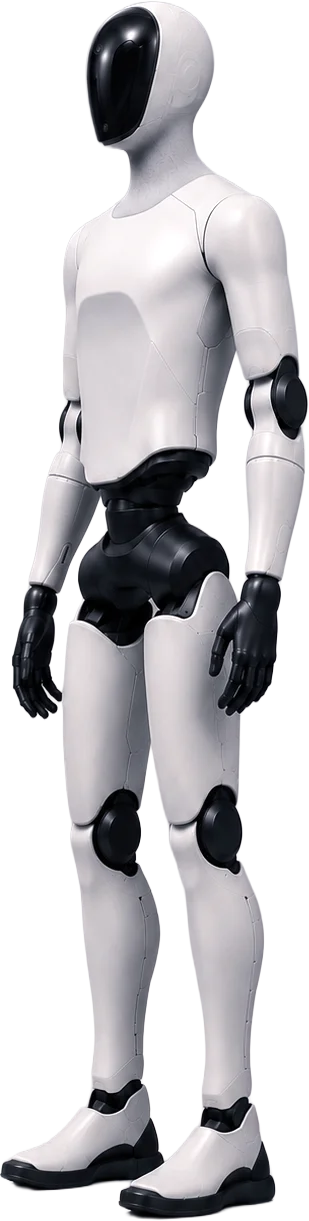
Motubrain is ShengShu Technology’s World Action Model for the physical world, designed as a general-purpose brain for embodied robots.
It unifies environmental perception, world modeling, and action generation within a single foundation model, enabling robots to make continuous decisions based on an understanding of the physical world, rather than relying on separate systems for perception, planning, and control. Powered by this unified architecture, Motubrain supports cross-embodiment adaptation, multi-task generalization, and long-horizon task execution, allowing robots to perform complex tasks across real-world scenarios including homes, industrial environments, and commercial settings.
What are World Action Models?
World Action Models are the core technology behind ShengShu Technology’s Foundation World Model strategy for the physical world, serving as the bridge between the digital and physical worlds.
ShengShu Technology believes that general intelligence requires two complementary capabilities: the ability to generate the world and the ability to act within it. In the digital domain, World Generation Models learn and generate the world. In the physical domain, World Action Models understand the underlying dynamics of the physical world and enable robots to interact with and accomplish real-world tasks. Together, they form a unified Foundation World Model framework that extends AI from digital content generation to intelligent interaction with the physical world.
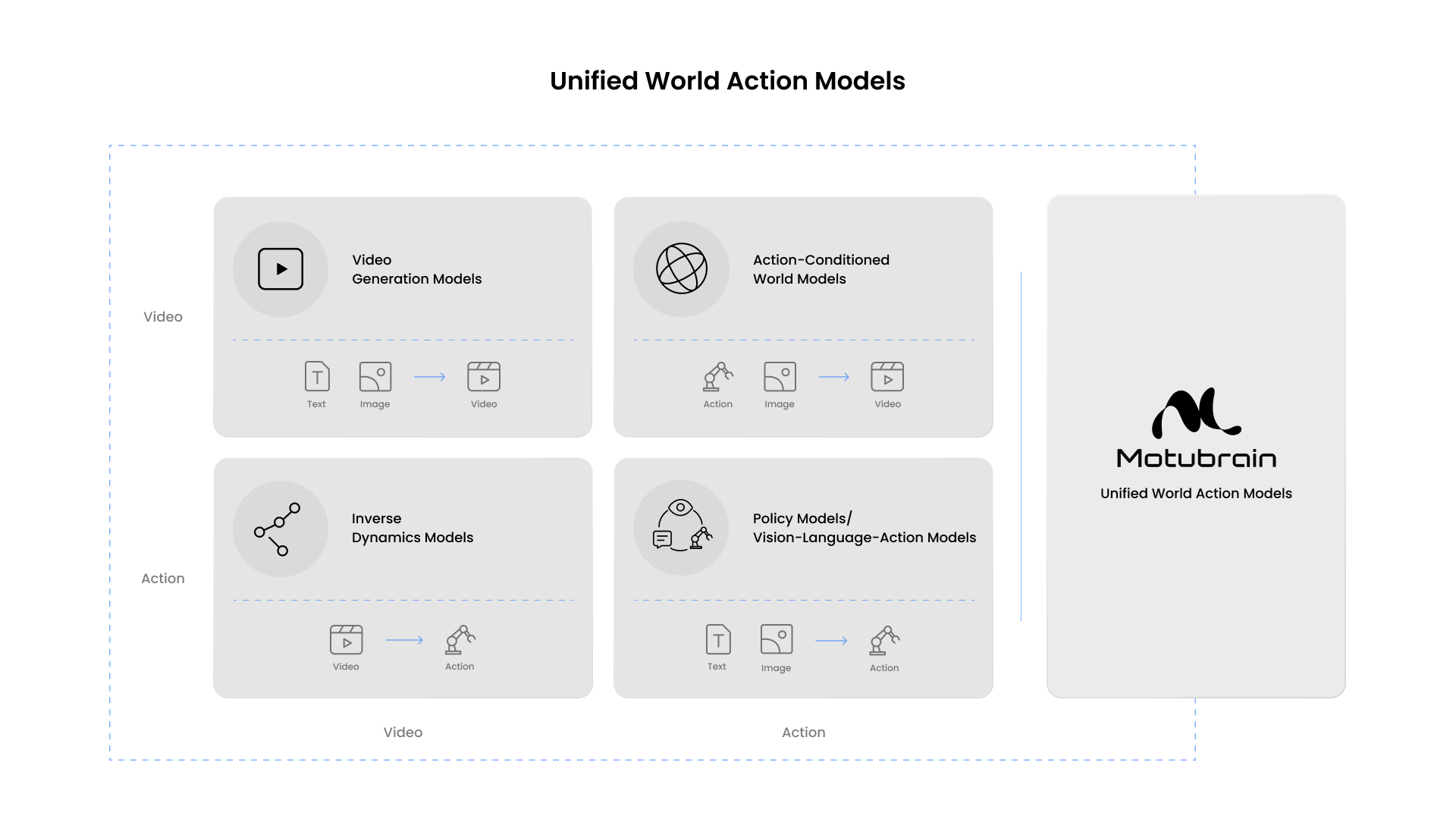
Unlike conventional robotic models that primarily learn action mappings, World Action Models jointly model video, action, and language to capture the shared principles governing environmental dynamics, task objectives, and robot behavior. This unified approach enables stronger generalization across tasks, embodiments, and real-world environments.
How is Motubrain related to Motus?
Motus established the technical paradigm of World Action Models, while Motubrain advances that paradigm into a general-purpose embodied AI for real-world robotic deployment.
In December 2025, ShengShu Technology released and open-sourced Motus, taking the lead in proposing and validating the core ideas behind World Action Models. Building on this foundation, Motubrain further scales up the model and introduces systematic algorithmic and engineering upgrades for real-world robot deployment, including unified multi-view modeling, unified action representation, cross-embodiment adaptation, efficient real-time closed-loop control, and inference acceleration. These advances enable large-scale embodied foundation models to operate efficiently and reliably on physical robots.
What is the difference between World Action Models (WAMs) and traditional Vision-Language-Action (VLA) models?
Traditional Vision-Language-Action (VLA) models primarily learn mappings from observations to actions, whereas World Action Models adopt a unified modeling approach that jointly learns from video, action, and language.
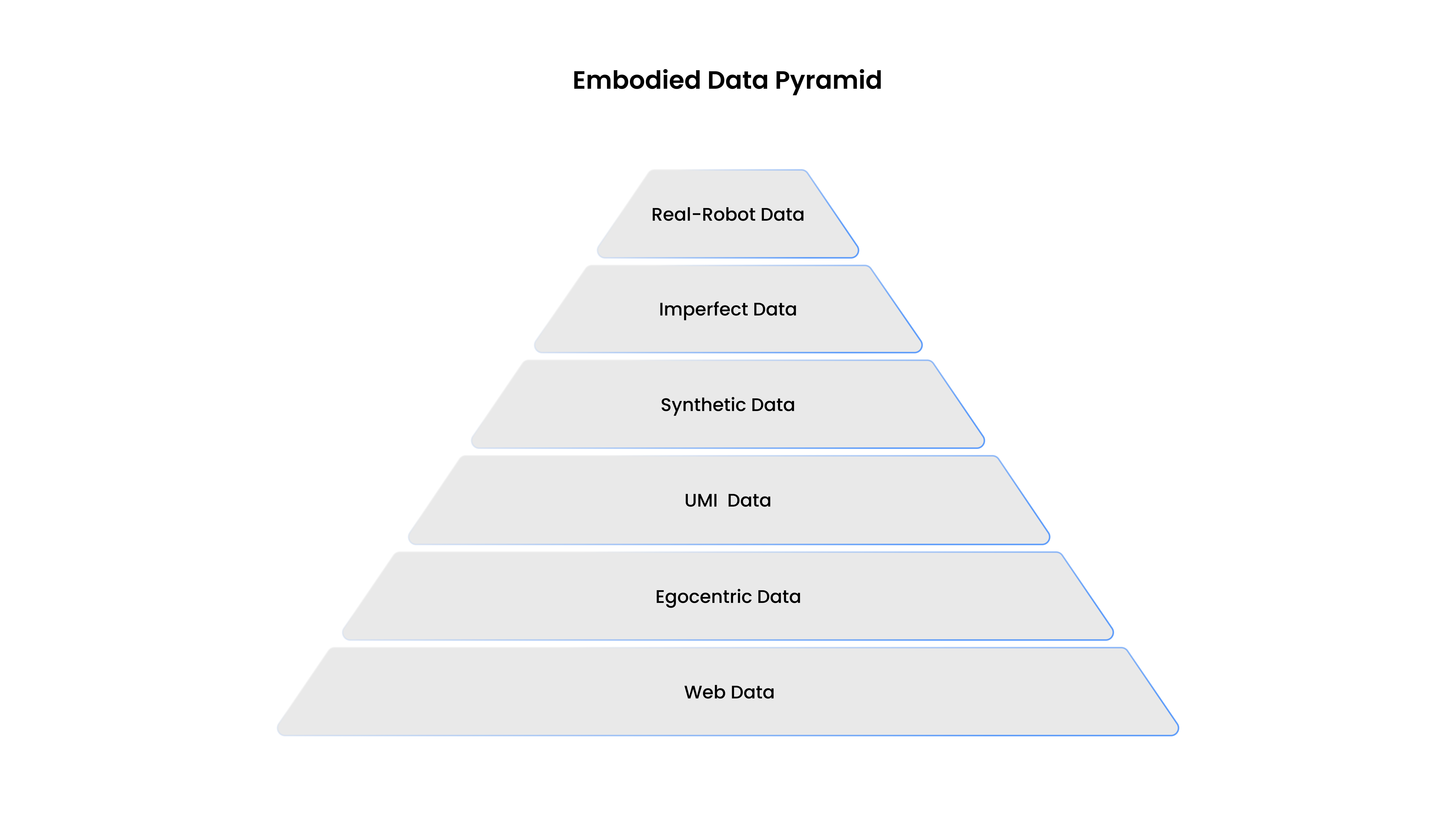
Rather than simply learning how robots should act, this unified framework captures the shared principles underlying environmental dynamics, task objectives, and action outcomes, enabling the acquisition of transferable world knowledge. Compared with conventional VLA models, which rely primarily on robot trajectory data, World Action Models can leverage a much broader range of heterogeneous multimodal data. This enables stronger generalization across tasks, robot embodiments, and real-world environments, while supporting better scalability and long-horizon task execution, providing a new path toward general embodied intelligence.
What are the core advantages of Motubrain?
Motubrain’s core advantage is its ability to unify world modeling, future-state prediction, and action generation within a single model. This enables robots not only to execute actions, but also to understand task objectives, anticipate changes in their surroundings, and continuously make informed decisions.
By jointly modeling visual, language, and action, Motubrain learns world knowledge from diverse multimodal data sources. This allows it to adapt to a wide range of robot embodiments, task types, and complex, dynamic real-world environments. Motubrain also supports complex instruction following, long-horizon task execution, bimanual coordination, and online error correction. Combined with real-time closed-loop control, these capabilities enable stable deployment and reliable execution on physical robots.
How does Motubrain respond when the environment changes?
When the environment changes, Motubrain does not simply replay a predefined trajectory. Instead, it continuously monitors the current state, takes the task objective and action feedback into account, and updates its behavior in real time.
Even when presented with objects, object placements, or environmental arrangements not seen during training, Motubrain can apply its learned world knowledge to novel situations. It can anticipate changes in the environment, predict the consequences of its actions and adapt its strategy accordingly, enabling robust generalization to new tasks and environments.
Through unified world–action modeling and real-time closed-loop control, Motubrain can handle changes in object positions, task interruptions, and execution deviations. It corrects errors online, replans its actions, and continues working toward the task objective, improving the robot’s adaptability and reliability in complex environments.
What capabilities will Motubrain expand in the future?
Looking ahead, Motubrain will extend its support to a broader range of robot embodiments and real-world application scenarios. It will continue to strengthen its ability to generalize across embodiments, tasks, and environments, while enabling faster adaptation and deployment.
By incorporating increasingly rich and large-scale multimodal, heterogeneous data, Motubrain will further improve its zero-shot generalization and performance on unseen-task evaluations. It will also deepen its ability to model and predict world states, task objectives, and action outcomes, supporting longer-horizon tasks involving multiple objectives and coordinated actions.
These advances will enable Motubrain to operate more efficiently and reliably across a wider range of real-world robotic applications, while simplifying deployment and helping to explore and validate scaling laws across robot embodiments.